Most laser cleaning machine quotes go wrong before anyone talks about price. The buyer writes "we need a laser cleaner for rust", the supplier guesses a power level, and the machine that arrives is either too slow for the workload or too hot for the part. A short, specific requirement prevents that. This guide lists the six things MAXWAVE application engineers ask for before they recommend a machine, and why each one changes the answer.
Start With the Part, Not the Machine
Tell us what the part is made of and how thick it is. Carbon steel, stainless steel, cast aluminum, mold steel, wood and stone all react differently to the beam, and thickness decides how much heat the part can take.
Thickness is the first fork in the road. A continuous-wave (CW) laser removes material fast because it puts a lot of heat into the surface. On sheet thinner than about 4 mm, stripping paint with a CW machine can warp the part. A pulsed laser delivers its energy in very short bursts, so heat input stays low; that is why our pulsed lines are the usual choice for thin sheet, molds, precision parts and anything valuable. If the part is thick structural steel and speed matters more than a perfect finish, CW is usually the better buy. Our pulsed vs CW guide walks through the trade-off in detail.
Also say what the part is worth to you. A scrapped mold insert costs far more than a scrapped steel bracket, and that changes how much heat risk is acceptable.
Describe the Layer You Need to Remove
"Rust" covers everything from a light orange bloom to deep scale. "Paint" can mean one thin coat or several layers of industrial coating. Name the contamination as precisely as you can:
- Rust: light surface rust or deep, layered rust.
- Paint or coating: how many coats, and whether the primer must stay or can go.
- Oxide or weld discoloration: heat tint on stainless steel, oxide on aluminum before welding.
- Oil, grease or mold residue: release agent, carbon build-up, rubber or plastic residue on tooling.
Thin layers suit pulsed machines. Thick layers over large areas point toward CW. Equally important is what must stay: if you need to remove a top coat but keep the primer, or keep the original surface texture of a mold, say so, because that sets the laser parameters rather than the machine size.
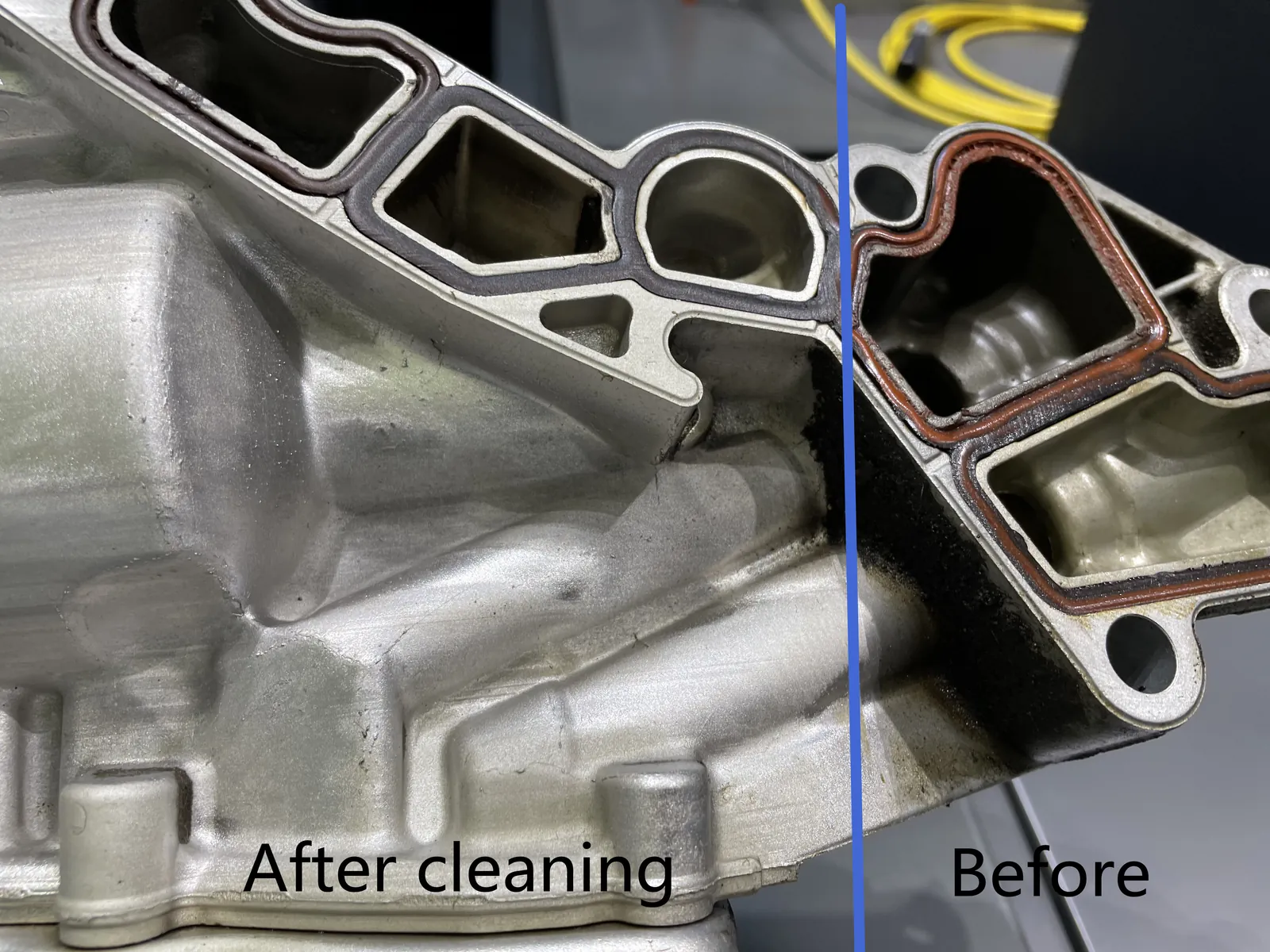
Send a close-up photo with something for scale, such as a ruler or a coin, and a second photo of the whole part. You can compare against our cleaning results to show the finish you expect.
Give the Area and the Workload as Numbers
"A lot of parts" cannot be configured. Square meters per day, parts per shift or hours of cleaning per day can. Workload is what separates a 100 W machine from a 500 W one, and pulsed from CW.
Cleaning rates always depend on the material and the layer, so treat published figures as a starting point. As a reference, for paint and organic coatings our air-cooled pulsed MW-LY line at 100–200 W cleans approx. 5–8 m²/h, while the water-cooled MW-LCW1500–6000 line cleans approx. 10–20 m²/h. If your daily area is small but the part is delicate, pulsed is the answer even though it is slower. If you clean large steel surfaces all day, the extra output of CW pays for itself. Our equipment overview lists every line side by side.
Say Where the Machine Will Work
The same cleaning job can need a different machine depending on the site. Tell us:
- Fixed workshop or moving between sites. The MW-LY is an air-cooled cabinet on wheels running on 220 V: it starts quickly, needs no chiller and suits intermittent use. The MW-LCW is water-cooled with a chiller and needs compressed air, and it is built for stable environments and long working hours; the 3000 W model runs on 380 V.
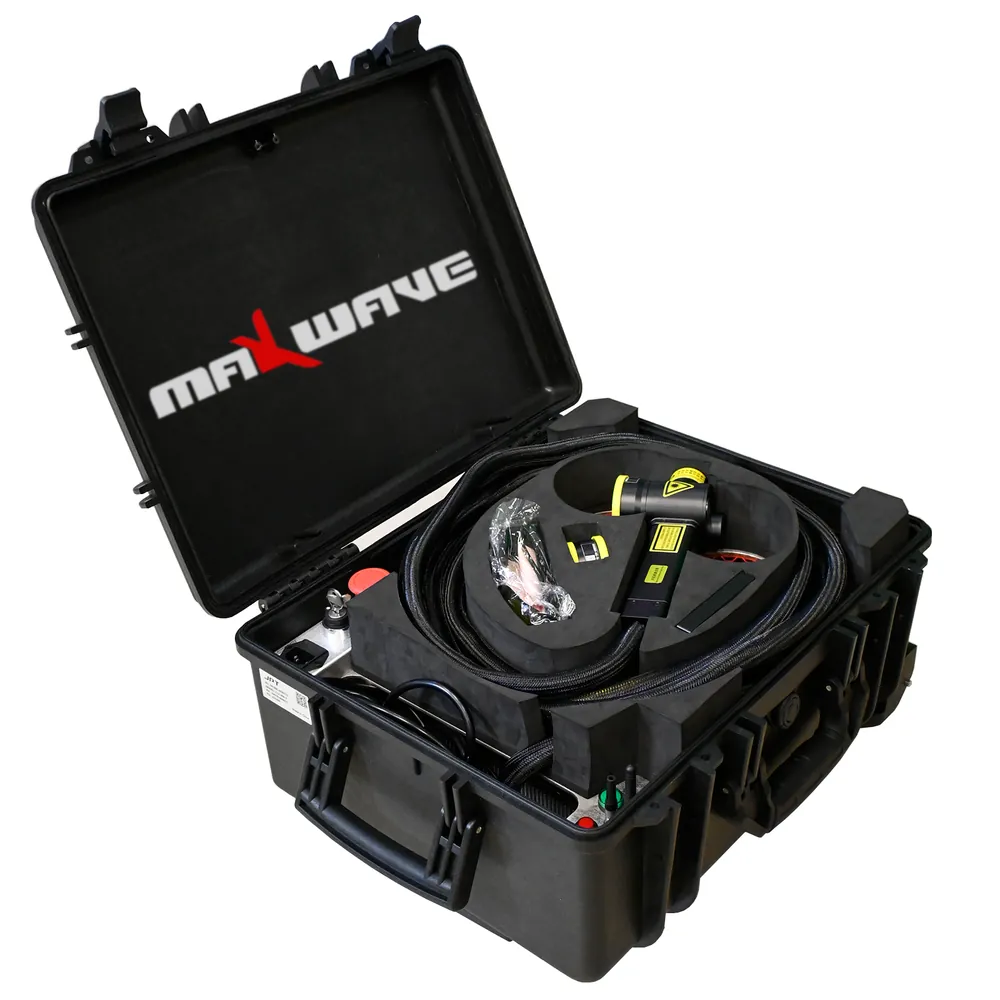
- Height, confined spaces and field work. For maintenance crews, the MW-LC trolley-case machine (24 V / 48 V supply) and the MW-LC50 backpack series are designed to be carried to the job, for thin contamination where efficiency is not the first priority.
- Distance from the machine to the part. The MW-LCW comes with a 15 m fiber or a custom length, so tell us how far the cabinet will stand from the work.
- Climate. In hot regions and for long shifts, water cooling keeps output stable.
Plan the Laser Area and Fume Extraction Up Front
Every laser cleaning machine we supply is Class 4 laser equipment. The beam can injure eyes and skin directly and by reflection, so the work runs in a controlled area with eyewear rated for the laser wavelength, screens where people pass, and extra care on shiny metal that reflects. The removed layer becomes fume and fine particles, so plan fume extraction close to the cleaning head from day one.
Tell us whether you already have extraction and a closed cleaning area, or whether the machine will work in an open shop or outdoors. It does not change the laser source, but it changes the setup advice our engineers send with the machine. More on this is on our support and maintenance page.
What a Complete Requirement Looks Like
A requirement that gets a precise recommendation on the first reply reads like this:
- Part and material: carbon steel brackets, thicker than 4 mm.
- Layer: two coats of industrial paint over light rust; the primer can go.
- Workload: one shift a day, most of it on this part.
- Site: fixed workshop, 380 V available, compressed air on the line, no extraction yet.
- Photos: one close-up with a ruler, one of the whole part.
From that, an engineer can recommend a line and a power level, explain why, and flag anything to test first. Before shipping, you can inspect the machine through a pre-shipment inspection or a remote video inspection.
Ready to send yours? Use the form below or the contact page, or message us on WhatsApp at +86 153 2715 5363 with your photos.