Stainless steel
Main jobHeat tint after welding
Pulsed settings keep heat low, so the cleaned zone comes close to the color of the sheet beside it.
MAXWAVE supplies laser cleaning machines for welding shops and fabrication plants: oxide film, oil and mill scale off the joint before the arc, heat tint and discoloration off the seam after it.
No grinding disc cutting into the base metal, no pickling paste to rinse off and collect. The head works along the seam without touching it, at a width set to the joint.
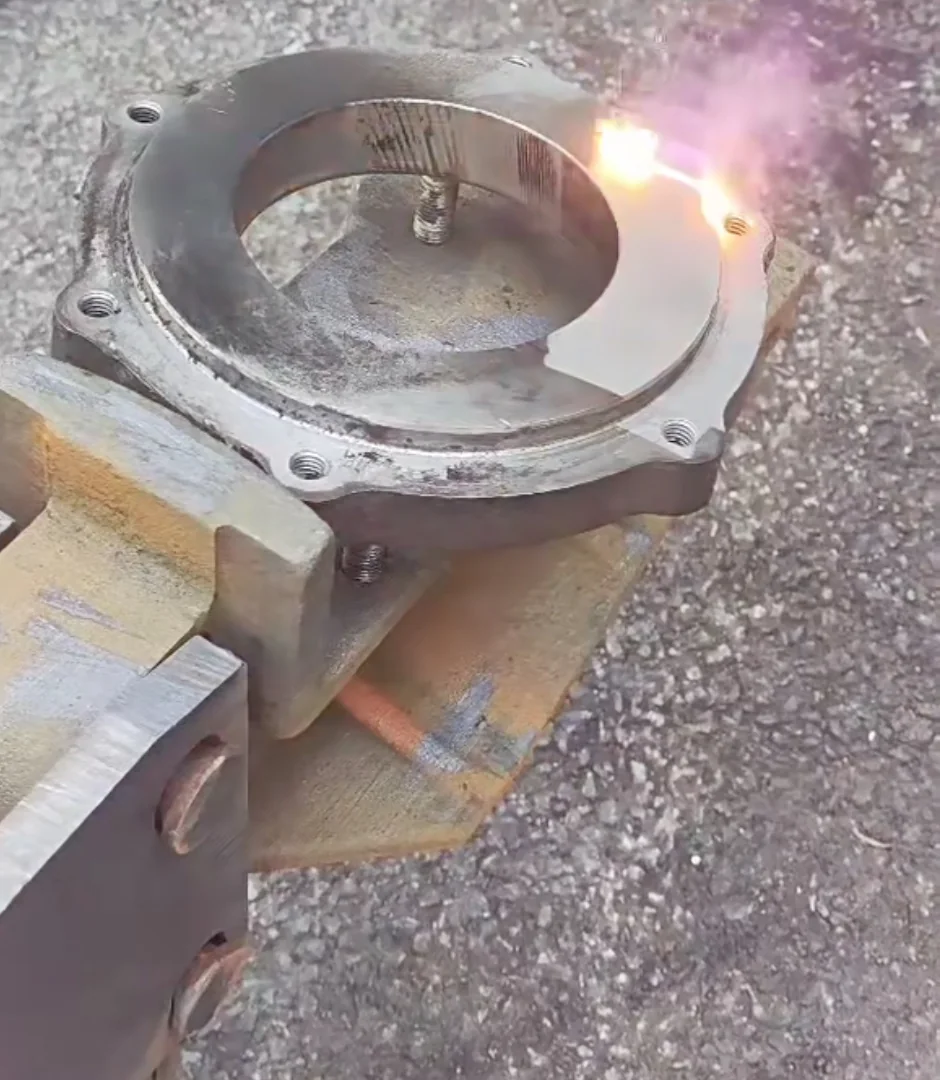 Before
After
Three layers can sit between the arc and the base metal at a joint. Laser pre-weld cleaning takes all three off in one step.
Whatever is on the joint goes into the weld pool with the metal. There it can show up as weld defects, and as rework time for the welder:
What comes off the joint zone:
The joint comes off the machine clean and dry: no solvent to evaporate, no grit left in the preparation, so fit-up and welding follow straight on.
The cleaned zone follows the joint, not the whole part. The line follows the metal thickness and where the part is.
A double-swing cleaning head scans the beam in a 2D pattern, and the operator sets the pattern to the width of the joint zone. The strip on each side of the joint is cleaned evenly in one pass; the surface beyond it is left untouched.
Single-swing and double-swing heads compared on the pulsed vs CW laser cleaning machine page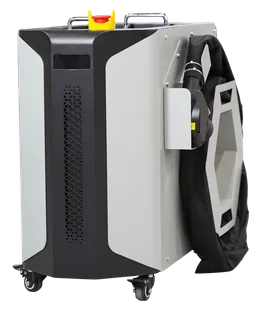
Sheet assemblies, thin-wall parts, machined parts and joints close to finished faces. Low heat input keeps the joint zone at the shape and color it had before cleaning, and settings stored per joint start the next batch of the same part from the same values.
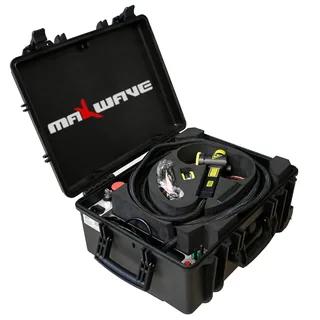
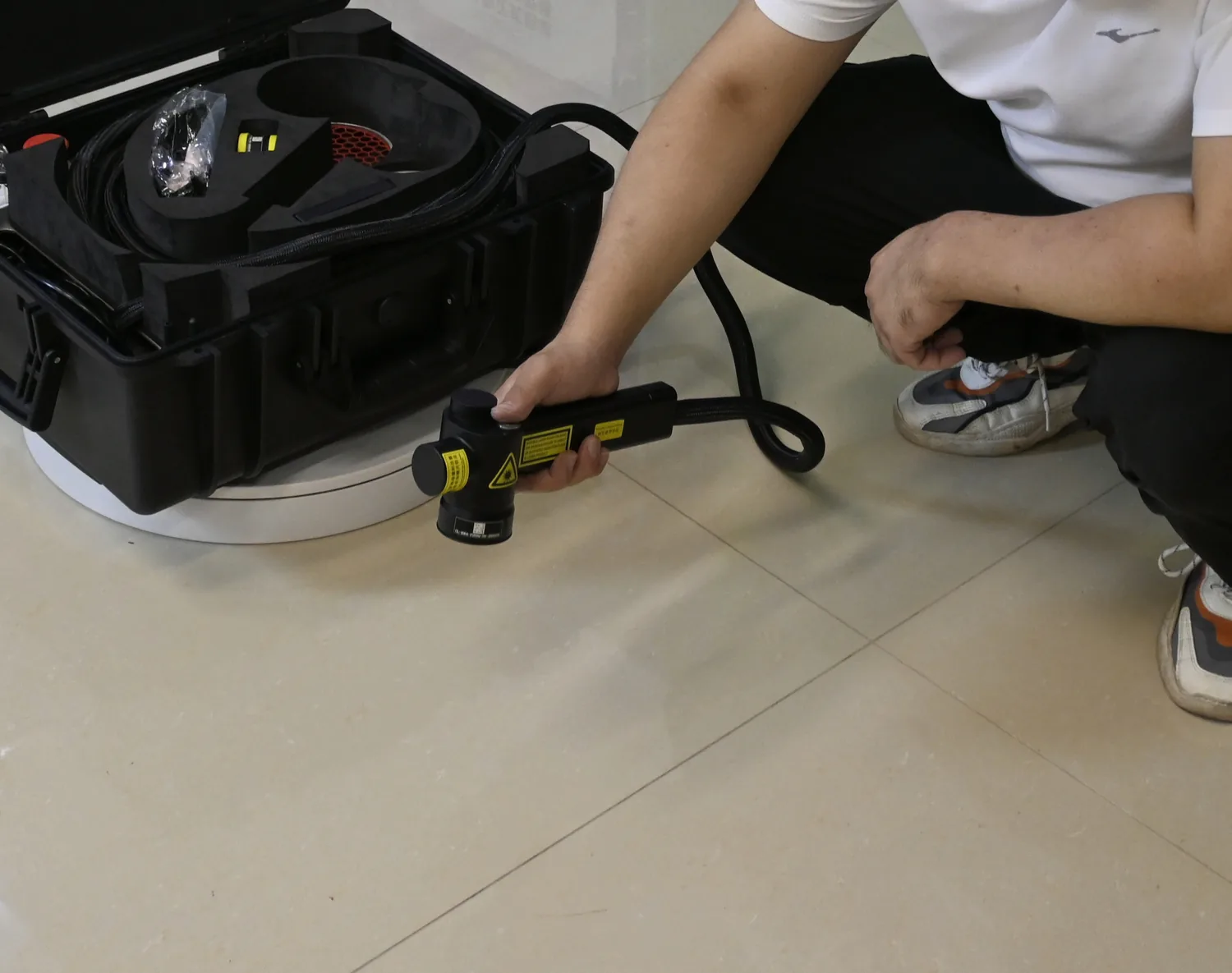
Where the part cannot come to the workshop, the MW-LC trolley case and the MW-LC50 backpack clean the joint in place. Both are matched to thin oxide and light rust, not heavy scale.
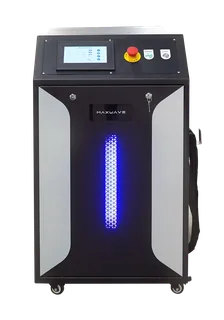
Mill scale along long seams on thick plate, beams and heavy sections runs faster on the water-cooled continuous cabinet, with a chiller for seams cleaned shift after shift. A small amount of powder may remain after scale, so it is cleared from the joint before welding. Sheet joints stay on pulsed.
Welding leaves a band of colored oxide on and beside the seam. Laser post-weld cleaning takes it off the bead and the heat-affected strip on both sides.
Once cleaned, the weld shows its metal color again, close to the base metal next to it, and the part moves on to inspection, assembly or coating.
The operator guides the head along the seam with the pattern width set to the bead plus the tinted strip. Pulsed is our standard line for post-weld work on thin and finished parts: its low heat input takes the tint off without leaving a heat mark of its own on the zone just cleaned.
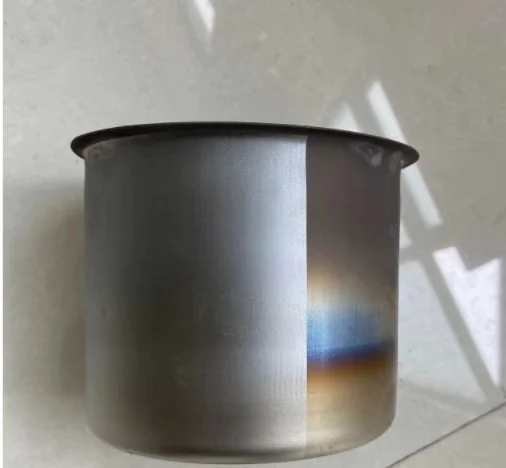 After
Before
Real partHeat tint on stainless steel: blue and straw on the right, cleaned back to metal color on the left.
Three ways to take tint and oxide off a weld, and what each one leaves you to handle.
| Method | What it does on the weld | What it leaves to handle |
|---|---|---|
| Grinding, flap discs, wire brushing | Cuts metal off the bead and the base metal around it; leaves scratch marks and changes the surface finish. | Discs and brushes to replace, grinding dust, hand time on every seam. |
| Pickling paste or bath | Dissolves the oxide chemically on stainless steel. | Acid to handle, rinse water, spent chemicals and waste liquid to collect and dispose of. |
| Laser cleaning | Removes the tint and oxide layer without contact and without cutting into the base metal. | Fume and particles at the cleaning point, taken by a fume extractor. |
Bead profiles above are schematic, not to scale. On-site setup and running cost against blasting, chemicals and grinding: laser surface preparation for contractors
Settings differ by metal, so our engineer recommends them from your photos and the metal you name.
Main jobHeat tint after welding
Pulsed settings keep heat low, so the cleaned zone comes close to the color of the sheet beside it.
TimingClean close to the welding step
A new oxide film forms on aluminum soon after cleaning. Bright aluminum also reflects more of the beam, which makes reflection protection in the cleaning area essential.
Main jobMill scale before welding
Cleaned joints go to welding without long storage, since bare steel takes on flash rust in damp air.
Where the machine stands follows how you weld: by hand at a bench, or on a robot cell.
With manual welding, the cleaning machine stands at the post-weld station or beside the welding bench, and the operator cleans each seam as parts come off welding.
For welds on installed structures, the trolley case goes to the seam and the backpack goes up to welds at height.
Trolley case laser cleanerWhere welding runs on a robot or an automated line, a cleaning head can be mounted at a fixed station before or after the weld cell, with a programmed path and laser output started and stopped by the line. Every part is cleaned the same way at the same position.
Fixed-station and robot-assisted systems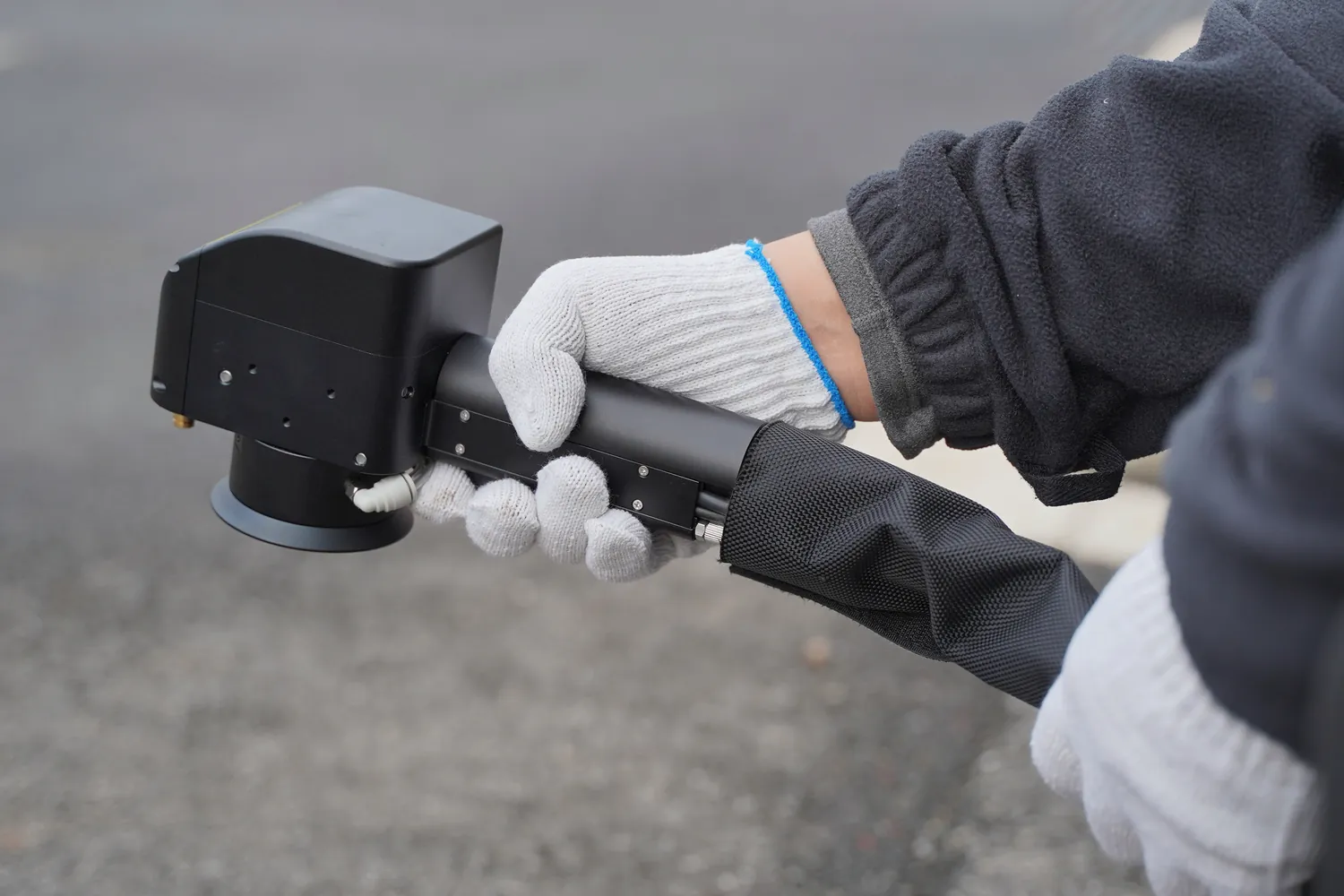
All four lines are Class 4 laser equipment. At a weld bay, the cleaning point is screened off, with eye protection and protection against reflections, and a fume extractor sits at the beam.
Setup and operator trainingWeld work is measured in meters of seam; our reference rates are area per hour. Seam length times cleaned width gives the area to compare.
| Machine line | Oxide and scale (approx.) |
|---|---|
| MW-LCW water-cooled continuous, 2000 to 6000 W | about 5 to 10 m²/h on oxide scale and rust |
| MW-LY air-cooled pulsed, 100 to 500 W | Thin oxide films and heat tint across the range; beam time sized by our engineer from your seam details |
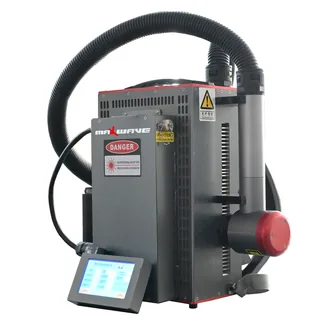 MW-LC trolley case and MW-LC50 backpack | Thin oxide and light rust; not heavy scale |
Swipe the table sideways to read both columns.
From our product data. Values move with the metal, the layer and the settings, so read them as a comparison between lines, not as the figure for your seam.
Four kinds of welded work, each with the line it usually goes to.
Before-and-after photos of oxide and heat tint: laser cleaning results
Our engineer recommends the line, the power and the head from your metal, your seam and a photo.
Phone / WhatsApp: +86 15327155363 · Call