Laser Rust Removal: Back to Bare Steel With No Blast Media and No Residual Powder

MAXWAVE supplies laser rust removal machines for manufacturing plants, maintenance and repair teams, and surface preparation contractors. The beam takes the rust off and leaves bare steel, with no blast media to buy, contain or sweep up.

The machine follows two things: how heavy the rust is, and what happens to the part next. Pulsed machines leave no residual powder after two passes; continuous machines clear heavy rust far faster, and a small amount of powder may remain.

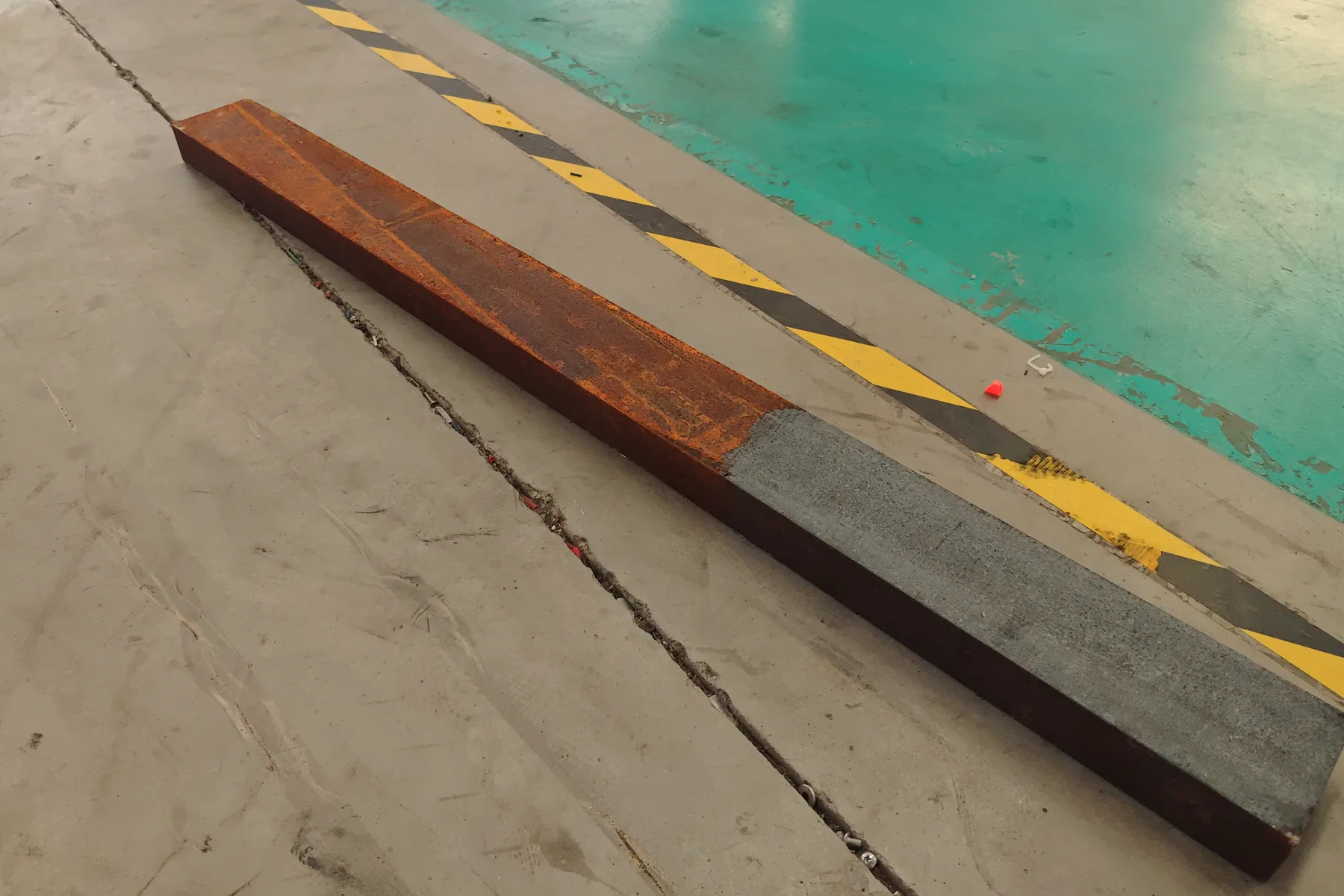
Laser rust removal on a steel bar: rusted half on one side, bare steel on the other after cleaning Before After

Laser Rust Removal by Rust Grade

Light, heavy and pitted rust clear to different results and go to different machine lines.

Flash Rust and Light Surface Rust
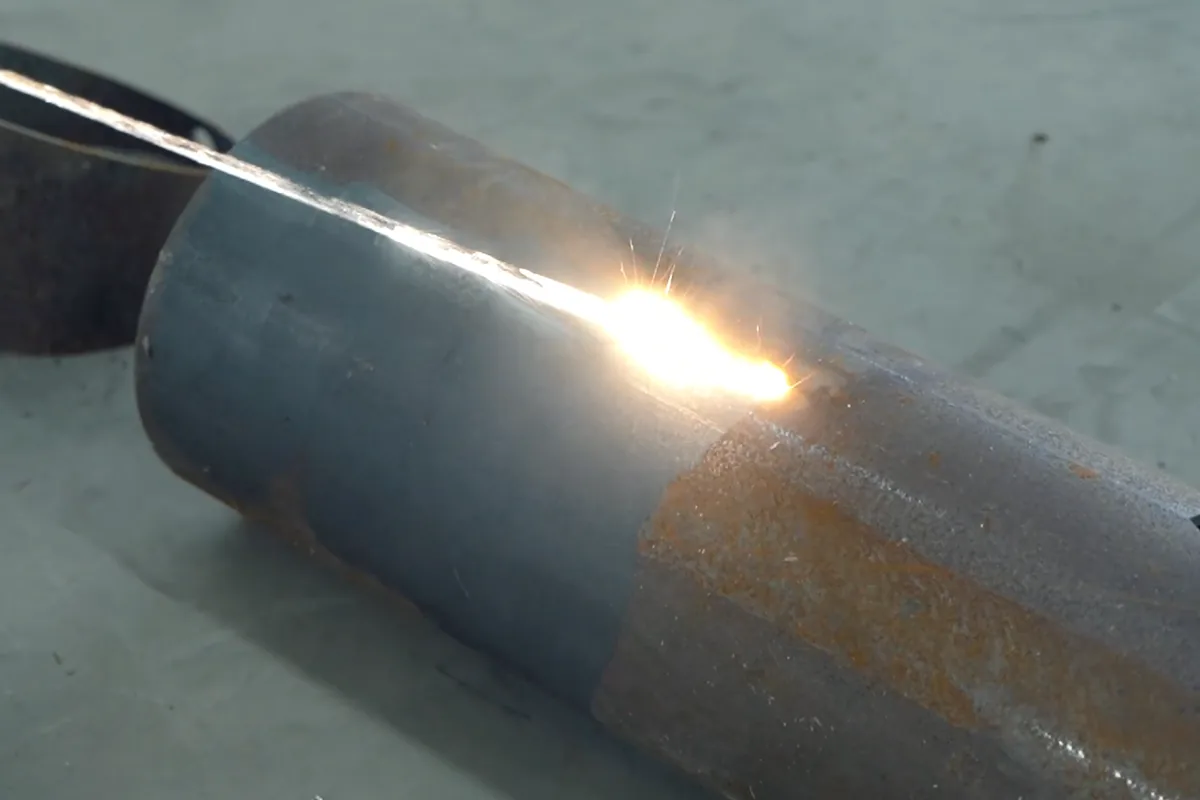
Light surface rust film on a steel pipe with a laser cleaned bare steel band beside itBeforeAfter

A thin orange or brown film on otherwise sound steel: parts that rusted in storage, after washing or outdoors. The shape, edges and machining marks still show through it.

What the laser clears

The whole film, back to the color of the base steel, on flat faces, edges and machined features. Because the layer is thin, this is the job where the beam most easily keeps the part as it was, which matters on finished and precision parts.

Line and what to watch Every MAXWAVE line handles light rust, so the part and the place decide.
  • MW-LYFinished and precision parts in the workshop: the air-cooled pulse laser cleaner cabinet.
  • MW-LCMW-LC50Rust spots on installed equipment or on site: the trolley case rolled to the job, or the backpack where the operator climbs or crawls to the rust. Both portables are matched to light rust and thin oxide.
  • MW-LCWLight rust over large plate areas every shift, where the area rate matters more than the residue.
Heavy Scale Rust on Thick Steel

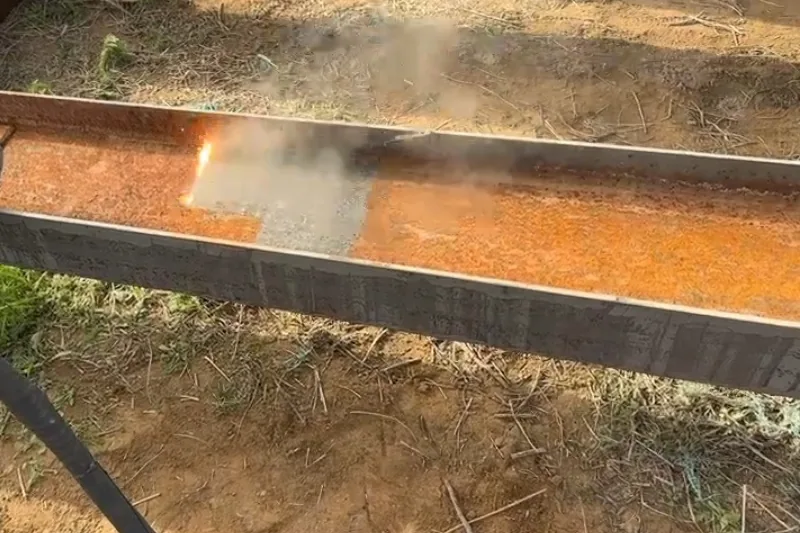
Heavy scale rust crust on an outdoor steel beam with a laser cleaned patch of bare steelBeforeAfter

A thick, layered crust that flakes or lifts in sheets, typical of beams, plate and structures left outdoors for a long time. The original surface of the steel is no longer visible.

What the laser clears

The full crust down to bare steel, layer by layer. On heavy rust the thickness of the crust sets the rate; the deep-rust rates in the rate table are the figures for this grade.

Line and what to watch This is continuous work.
  • MW-LCWThe water chiller holds the laser at working temperature over full shifts, which heavy rust on large areas needs. Options are on the water-cooled CW laser cleaning machine page.
  • MW-LYClears the same crust at a fraction of the rate, and moving up the MW-LY range does not change that: recommended for heavy rust only on small, high-value parts.
  • MW-LCMW-LC50Matched to light rust, not heavy scale. We say so in the quote if your photos show heavy scale.
  • Thin sheet under heavy rust: our distortion limit for continuous cleaning is stated for paint removal on sheet below 4 mm, so we review the part from your photos before recommending a line.

Pitted Rust

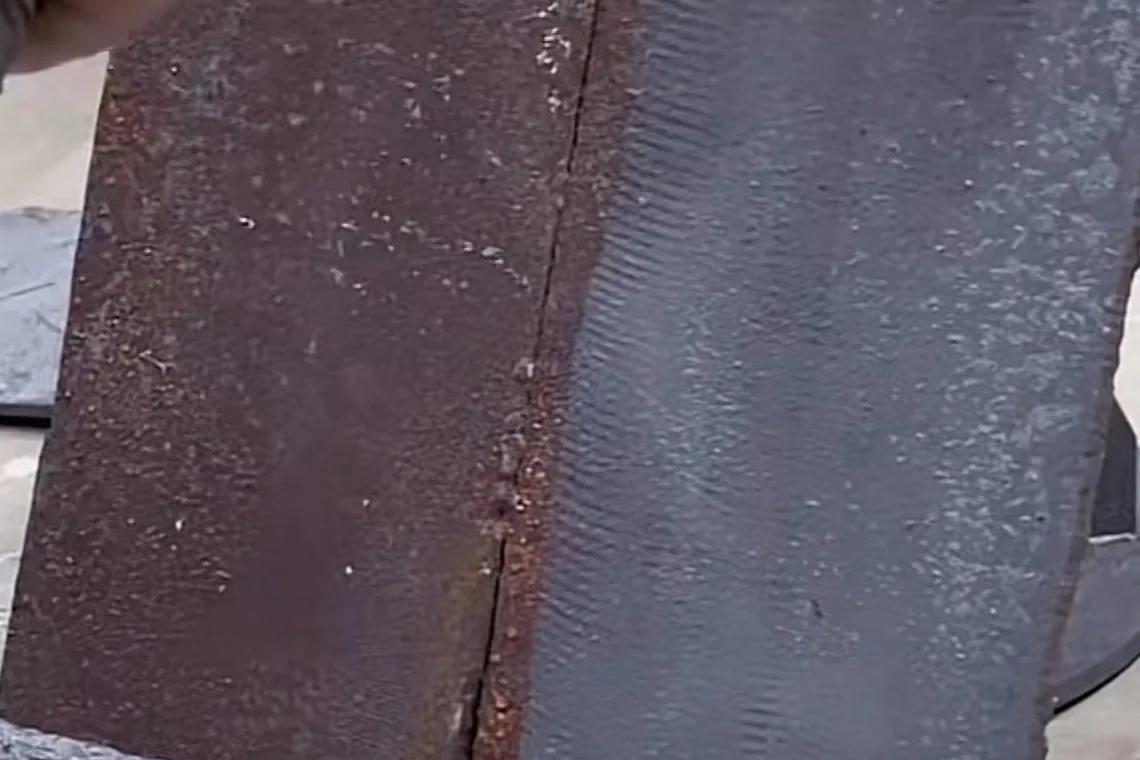
Rusted steel plate during laser rust removal, the cleaned side showing a pitted bare steel faceBeforeAfter

Rust that has eaten into the steel and left pits, craters or grooves, often under loose rust. Once the top layer is off, the pits show as dark spots on a bright face.

What the laser clears

The rust on the flat face, and the rust inside each pit the beam can reach in line of sight from the cleaning head. Pit bottoms take more passes than the face around them; a cleaned pit shows bare steel color at the bottom.

What the laser does not do

The pits stay. Laser cleaning removes rust and adds no metal, so steel lost to corrosion is still missing, and the pitted surface is what goes on to coating or repair. Rust in closed recesses or behind other parts, out of the beam's sight, also stays.

Line by part Plan extra passes on pitted zones.
  • MW-LYPitted finished parts and machine components, run in repeated passes over the pitted area with the power set to the part.
  • MW-LCWPitted structural steel and plate over large areas, with the extra passes on pitted zones planned into the beam time.
Cleaning head on pitted areasA double-swing head scans in 2D patterns and evens the surface in one pass; a single-swing head may need several passes, which adds up on pitted areas. Both head types are on our pulsed vs CW laser cleaning machine page.

Residue After Rust Removal and the Next Process Step

Both lines take rust back to bare steel. What stays on the surface decides the line once the rust grade allows both.

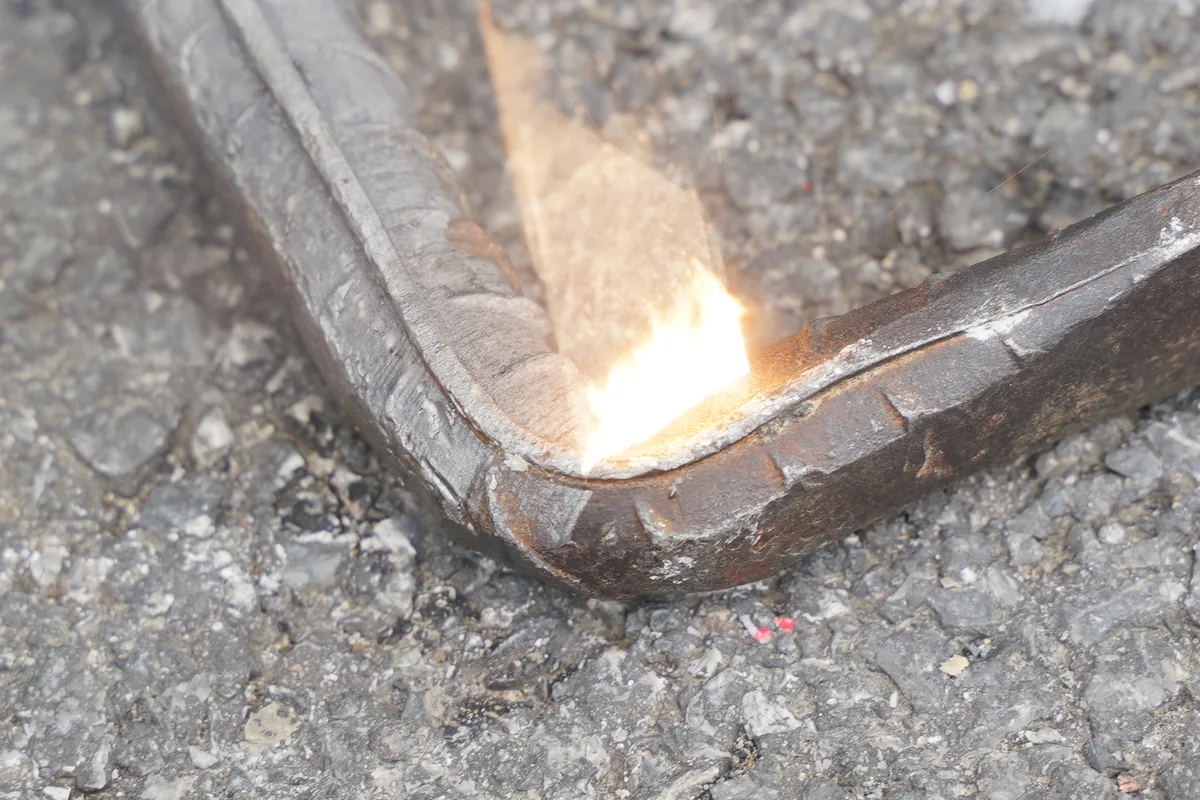
Pulsed laser rust removal at the bend of a steel bar, bare steel left behind the beam

Pulsed: no loose rust powder after two passes

The first pass lifts the rust and the second clears what remains. The part comes off the machine with no loose rust powder on it.
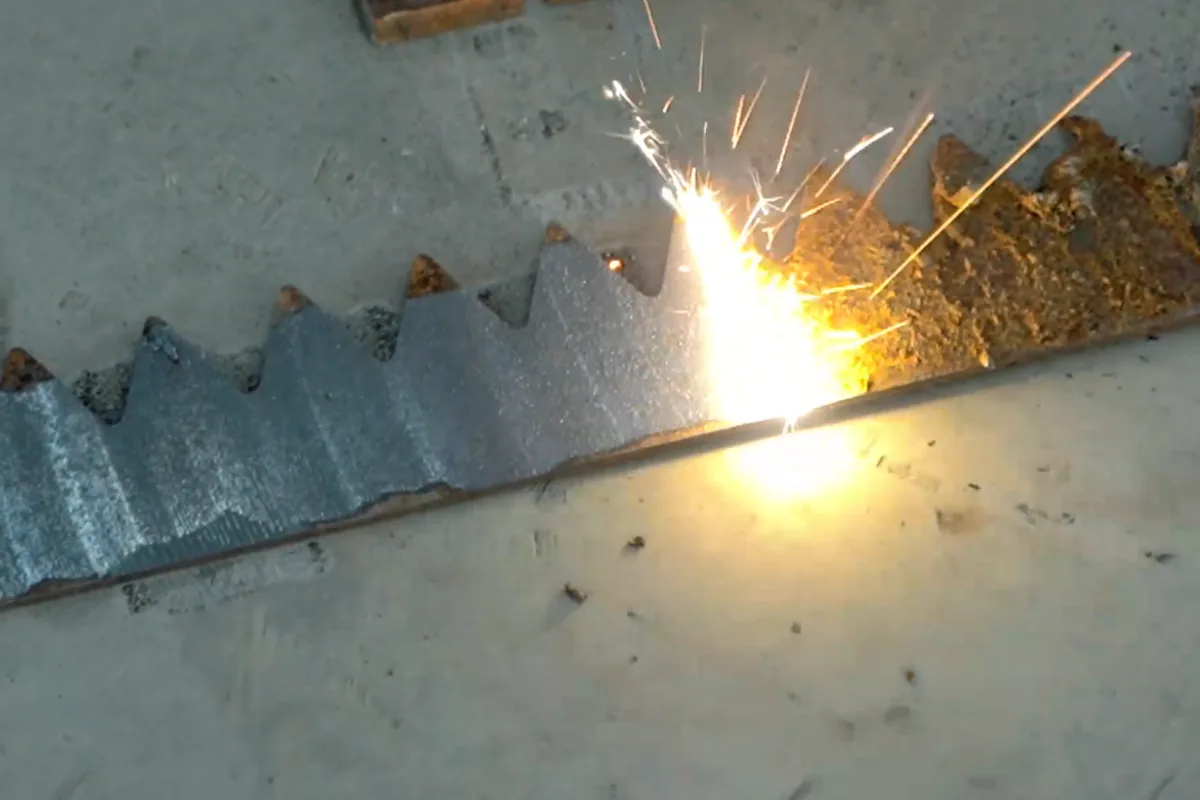
Continuous laser rust removal on a serrated steel edge, sparks where the scale comes off

Continuous: a small amount of powder may remain

Sustained heat removes the rust at a much higher area rate, and a small amount of powder may stay on the surface after rust or scale removal.
Show steps for
  • Next step

    Coating or painting straight after cleaning

  • Next step

    Welding

  • Next step

    Assembly or inspection

  • Next step

    Heavy rust on large structural areas, a little powder accepted

Heavy rust going straight to coating

We recommend by area: pulsed on small and medium areas, continuous on large structural areas with the powder cleared before coating.

Bare steel and the coating step

Bare steel starts to re-oxidize once it is exposed to air and moisture. Plan the coating or protection step close to the cleaning step, so parts are not left standing bare between the two.

Rust Removal Rates by Machine Line

Reference values from our product data. They move with the steel, the rust layer and the settings, so they compare lines; they are not a figure for your part.

Laser rust removal rates by MAXWAVE machine line
Machine linePowerRust rate (approx.)0510 m²/h
MW-LY air-cooled pulsed100 to 500 Wdeep rust about 0.5 to 1 m²/h
MW-LCW water-cooled continuous2000 to 6000 Wabout 5 to 10 m²/h
MW-LCW continuous, typical example1500 Wabout 4 to 8 m²/h
MW-LC trolley case and MW-LC50 backpack50 to 300 Wlight rust and thin oxide; not heavy scale

Swipe the table sideways to see every column.

Beam time for your area

To size a line, divide your rusted area per shift by the rate. For example, 30 m² of heavy rust is 3 to 6 hours of beam time on an MW-LCW at 2000 to 6000 W; on an MW-LY, the same area is 30 to 60 hours.
  • MW-LCW, 2000 to 6000 W3 to 6 h
  • MW-LY, deep rust30 to 60 h

Typical Rusted Parts and Structures

Where laser rust removal runs, and the line for each job.

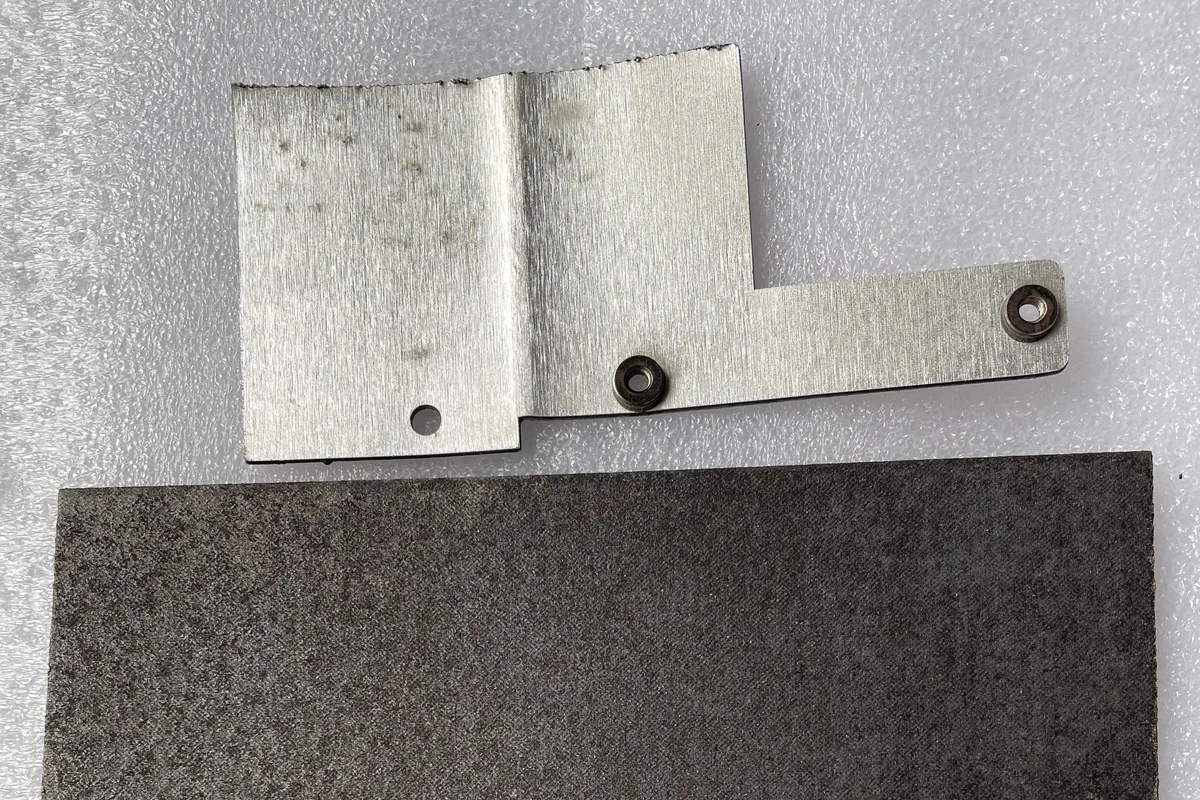
Steel plates with light surface rust next to a laser cleaned steel part

Steel plate pre-treatment

Rust and mill scale off plate before welding or painting, in the fabrication line.
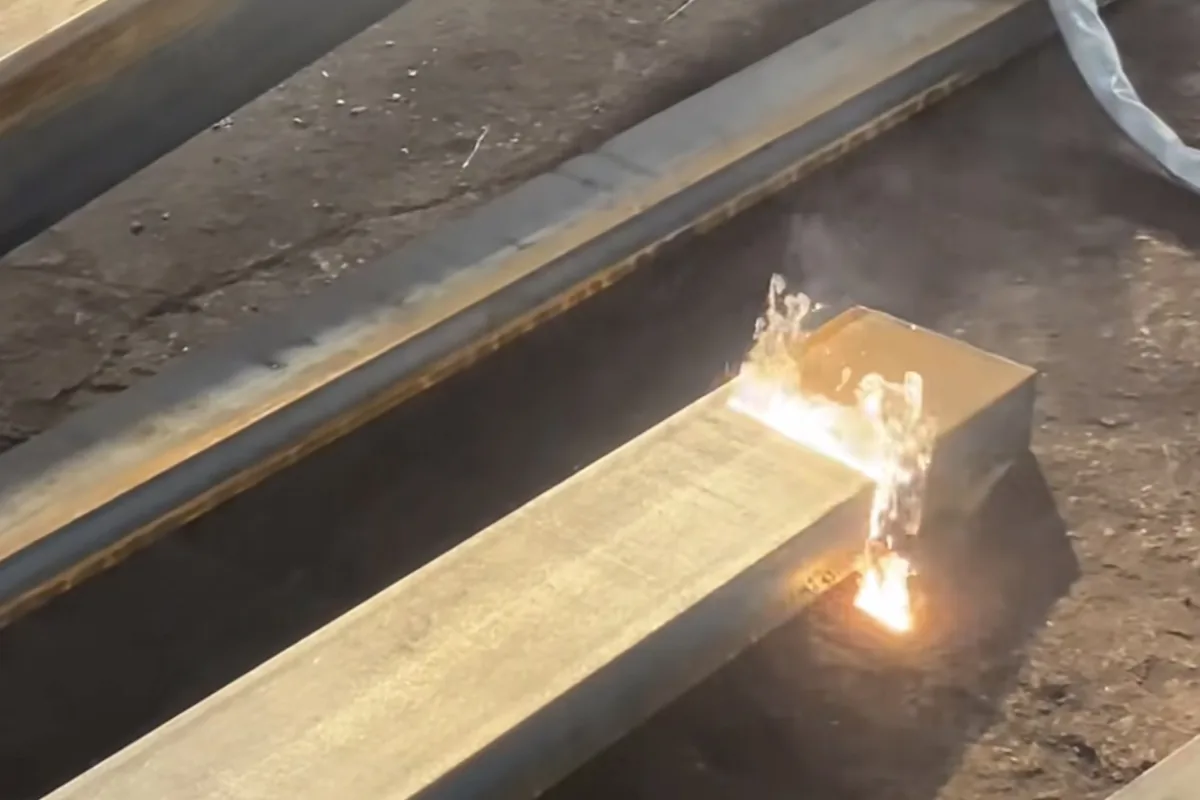
Laser rust removal on square steel tubes of a structural frame outdoors

Steel structures

Beams, frames and structural members with heavy rust over large areas.
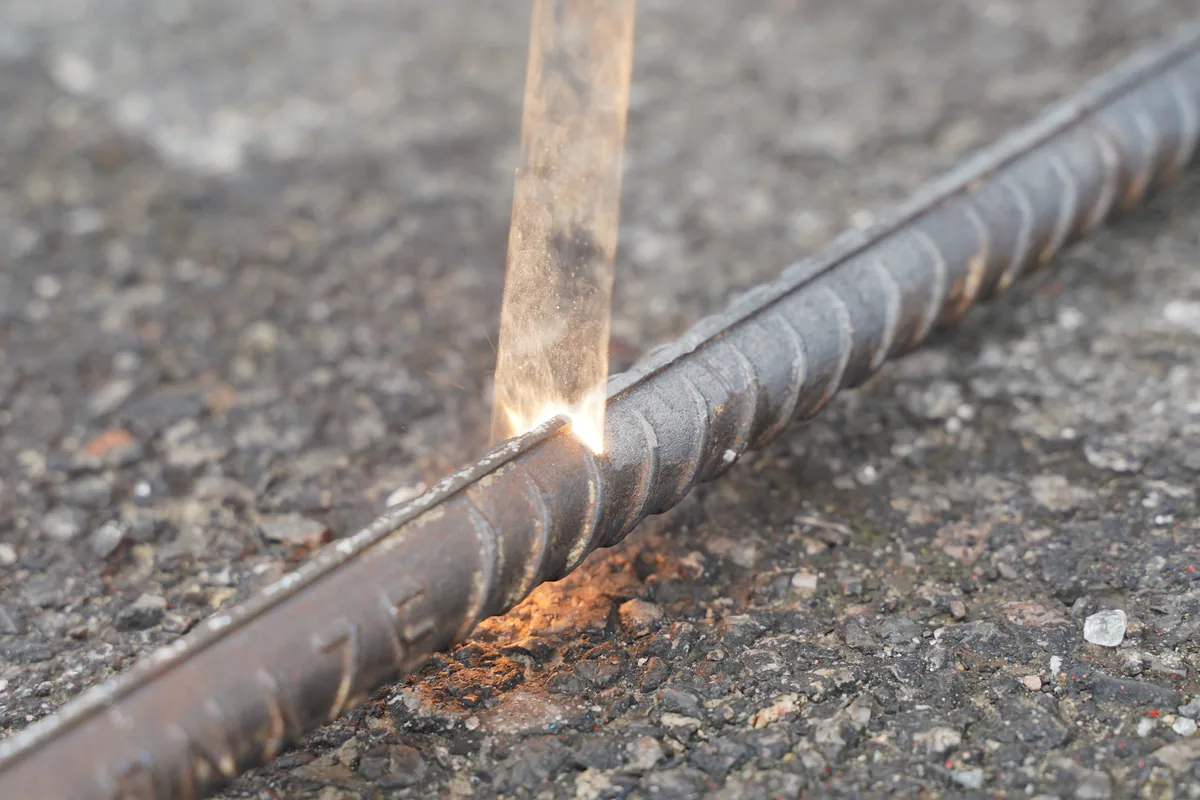
Laser beam removing rust from a steel rebar on the ground

Bars, rebar and pipe

Rust on bars and on the outer and inner walls of pipe, reached by remote focusing on pipe walls and shaped parts.

Before-and-after photos of rusted steel are on our laser cleaning results page.

Laser Rust Removal Compared With Blasting and Grinding

What changes on the part and on the floor when the laser replaces media or discs.

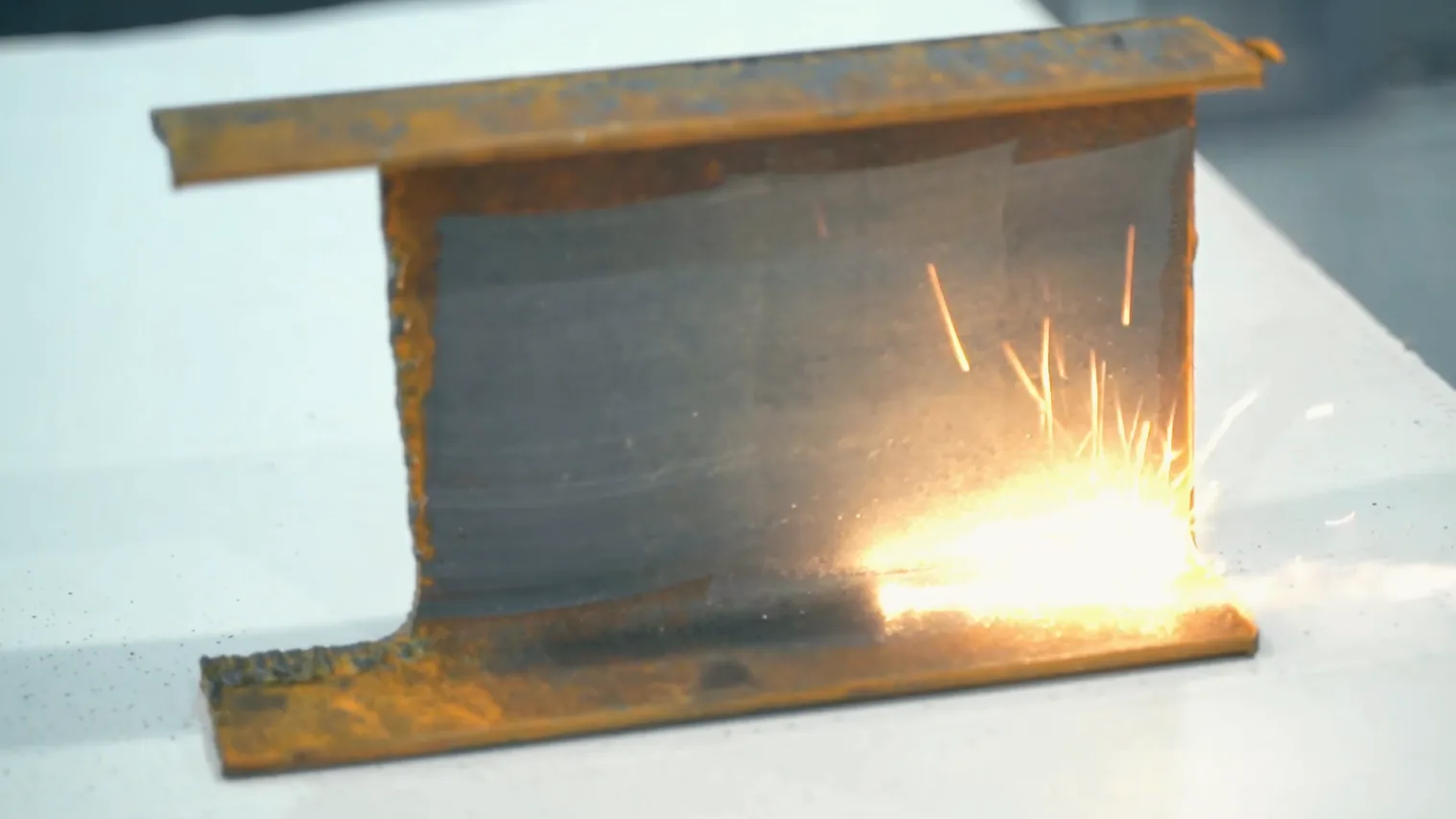
Industrial rust removal by laser on a steel channel section, sparks at the cleaning line
Rust off a steel channel, no media on the floor
No media, no discs
No abrasive media or grinding discs, so there is no spent media to recover and no disc wear on the part. The fume extractor collects the removed rust.
No roughness profile
Blasting cuts a roughness profile into the steel; laser cleaning returns the bare surface without one. Where your coating specification calls for a blasted profile, blasting stays in that step.
Class 4 laser area
All our lines are Class 4 laser equipment: plan a controlled area with protection against reflections and fume extraction at the cleaning point, as covered on our support and maintenance page.
Cost against blasting, chemicals and grinding

Send Photos of Your Rusted Parts

An engineer replies with the line and the power for your job.

What to send

  • Steel and thickness: of the part under the rust.
  • Rust grade: light, heavy scale or pitted, as you see it.
  • Area: rusted area per shift or week.
  • Next step and country: coating, welding or assembly, and where the machine will work.
  • Photos: the part, and a close-up of the rust including any pitting.

Phone / WhatsApp: +86 15327155363 · Call